Here’s what most people get wrong, and how you can fix it.
The heat is officially on!
After a pretty grey and dismal start to June, the end of the month is set to be hot, hot, hot and we will find ourselves heading outdoors to get a much-needed dose of vitamin D.
However, before you sit and soak up the rays, just a word of warning… have you actually applied your sunscreen correctly?
Before you leave the page thinking “I know all this”. Think again.
Most of us have grown up believing a quick dollop of sun lotion before heading outside was job done.
Well, spoiler alert…
…It’s not.
The NHS recently warned on its social channels that we are applying sunscreen wrong, and we should follow a 2-step rule to get our sun safety back on track.
People in the UK either don’t apply enough suncream, or don’t rub it in correctly to get good coverage. A clinical study conducted by the British Association of Dermatologists found that people miss on average 10% of their face when applying sunscreen, which is the most common site for skin cancer.
Most of us don’t apply enough sunscreen, don’t reapply it often enough, and routinely miss the same patches of skin every single time. With around 175,000 cases of skin cancer diagnosed in the UK every year, and nine in ten melanomas considered preventable, getting your sunscreen right matters.
The NHS has recommended a two-step process:
-
- Apply sunscreen 20-30 minutes before going out in the sun to allow it to dry and absorb into the skin to offer better protection
-
- Reapply another layer immediately before going out
However, we believe there are steps we need to consider in addition to this advice.
Here are our top tips for safe sunning:
1. Choose the right SPF
Before we even talk about technique, choosing the right product is key. The NHS recommends a minimum of SPF 30. There is a misconception that SPF 30 means you can stay out in the sun 30 times longer, but in fact the. SPF is a filter score not a multiplier of time. SPF 30 blocks around 97% of UVB radiation, while SPF 50 blocks around 98%. Look for a sunscreen that protects against both UVA (the ageing rays, responsible for long-term skin damage) and UVB (the burning ray, the main driver of skin cancer risk). Finally, make sure your sunscreen is in date. As a general rule, any suncream which has been opened over 12 months is probably best left well alone. As it won’t provide effective protection from the sun’s rays.
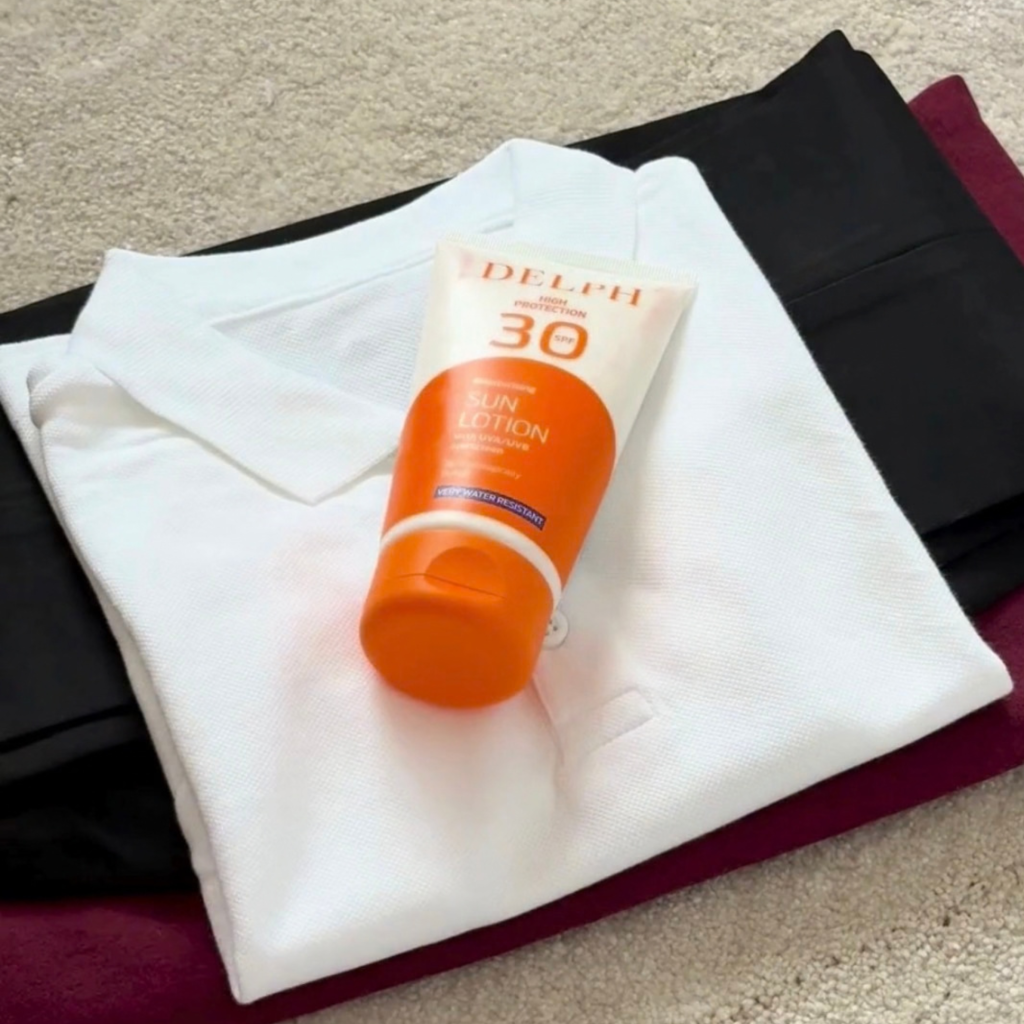
Delph sun lotion is vegan, offers high protection (UVA/UVB) for the whole family and is very water resistant. It is available in SPF 30 and SPF 50 and is dermatologically tested to high medical standards.
2. Be generous and use more than you think
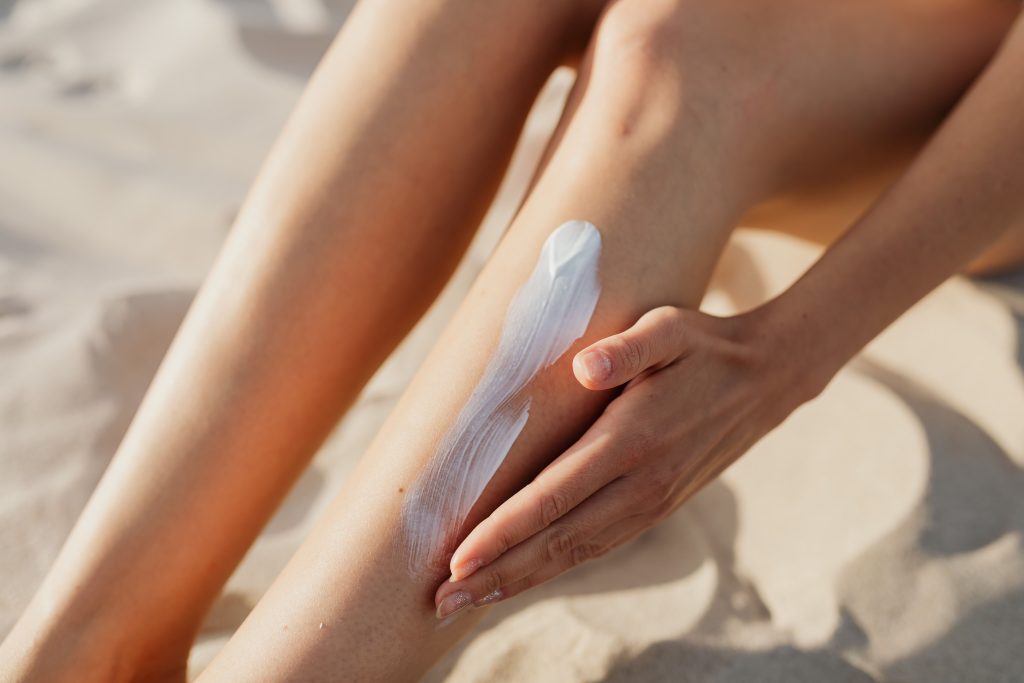
Quantity matters. Apply too little and you drastically reduce the protection level, regardless of the SPF on the label. According to the NHS, adults covering their full body should use around six to eight teaspoons of sunscreen, far more that the majority of us would admit to using. Your face alone needs at least a teaspoon.
Don’t forget the most commonly missed spots such as the back of the neck, eyelids, the ears, the scalp, the front of the armpit and tops of your feet. Pay special attention to these areas.
3. Timing is key
As mentioned previously, think of applying your sunscreen as you would your skincare routine – in two steps. Apply sunscreen 20 to 30 minutes before you head outside. This gives your skin time to absorb it properly. As recommended by the NHS, apply it again just before you sit outside. Think of it as a double layer of defence.
4. Reapply, reapply, reapply
This is where most sun protection routines fall apart. Sunscreen breaks down when exposed to sunlight, and it rubs off through sweat, clothing and general movement. Reapply at least every two hours , and immediately after swimming or rubbing your skin free of sweat with a towel. This is still important even if your sunscreen says it is water resistant. Water-resistant does not mean waterproof!
If its super hot, sit in the shade and cover up, when the sun is at its hottest. You will get a better longer-lasting tan if you tan slowly when the UV rays are weaker.
5. It’s not Just a summer thing
Up to 80% of UV radiation can pass through clouds. In the UK, UV levels are high enough to cause skin damage from March through to October. Abroad this is a much longer time. A quick check of the UV index on your weather app will tell you what you need to know. As a general rule, if it’s 3 or above, your skin needs protection. Year-round sunscreen use is one of the simplest habits you can build for long-term skin health.
6. Do you need sunscreen under makeup?
The simple answer is absolutely, yes you do, 100%.
Your moisturiser or foundation with SPF 30 in it should be seen as a bonus, but it does not measure up against a sunscreen. It’s rarely applied thickly or evenly enough to deliver the stated protection level. Apply your sunscreen first, give it 15 minutes to absorb, then layer your moisturiser and makeup on top. For midday top-ups, a sunscreen spray or SPF powder over your makeup makes it easy to stay protected without disturbing your look.
7. After Sun Matters Too
Great sun care doesn’t stop when you come indoors. After a day in the sun, your skin has been working hard to cope with UV exposure, heat and dehydration. A good after sun lotion, such as Delph After-Sun Lotion, ideally with aloe vera and hydrating ingredients such as Vitamin E, helps to soothe, cool and repair sun-exposed skin overnight, so your skin feels comfortable and smooth the next day, rather than sore and tight.
Get it right and sun safety really isn’t complicated: choose the right SPF, use enough of it, cover all the right places, and keep reapplying. Your skin will thank you, both now and for decades to come.
To find out more on sun safety visit the NHS website
TAGS: SUN CARE, SUN SAFETY, SUNCREAM, SKIN HEALTH , SPF